Sell

عربي


How the BYD Atto 3 and Blade Battery Proved Their Safety
 3/11/2026
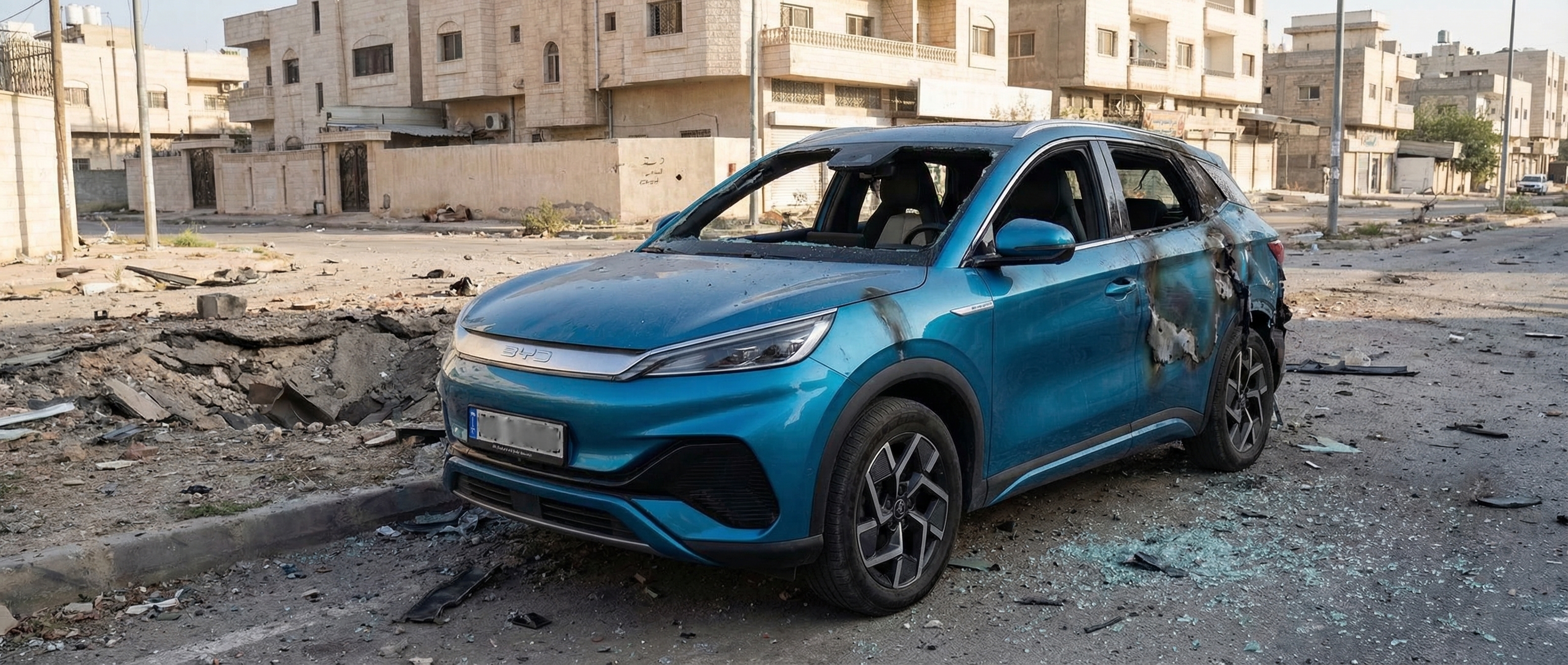
A recent real-world incident involving a BYD Atto 3 unexpectedly put the vehicle’s engineering and battery technology to an extreme test.
After a powerful explosion occurred directly behind the car creating a deep crater and generating intense pressure waves the vehicle’s structural integrity and battery safety systems were pushed to their limits.
Despite the force of the blast, the main structural pillars (A, B, and C pillars) remained intact, preserving the cabin structure. Even more importantly, the doors and locking mechanisms continued functioning normally, allowing all five passengers to exit the vehicle safely without requiring rescue tools.
The biggest concern in EV accidents is often battery safety. However, BYD’s Blade Battery, built using Lithium Iron Phosphate (LFP) technology, showed exceptional stability. Despite exposure to heat, pressure waves, and debris, the battery did not ignite and showed no signs of smoke or thermal runaway.
This performance is largely attributed to BYD’s e-Platform 3.0, which integrates the battery into the vehicle’s structure to improve rigidity, impact absorption, and overall safety.
As electric vehicles continue expanding globally and in regional markets, incidents like this highlight how modern EV engineering is evolving to meet extreme real-world challenges.
Read more EV insights on Sayarat.iq/evs and explore electric vehicles available in Iraq and Kurdistan on iQCars.net.⚡🚗